About rewards: categories and winning methods
Categories and types compared: which to pick, where each is linked, and when people learn they have won.
A reward is a prize: a hot chocolate, a gift card, a hamper. When you select Add New Reward, Studio asks two questions. What hands it out, the category, decides where you link it. How winners are picked, the type, decides when people learn they've won. Badges are different: they mark progress and have no prize value. See Gamification badges.
What hands it out
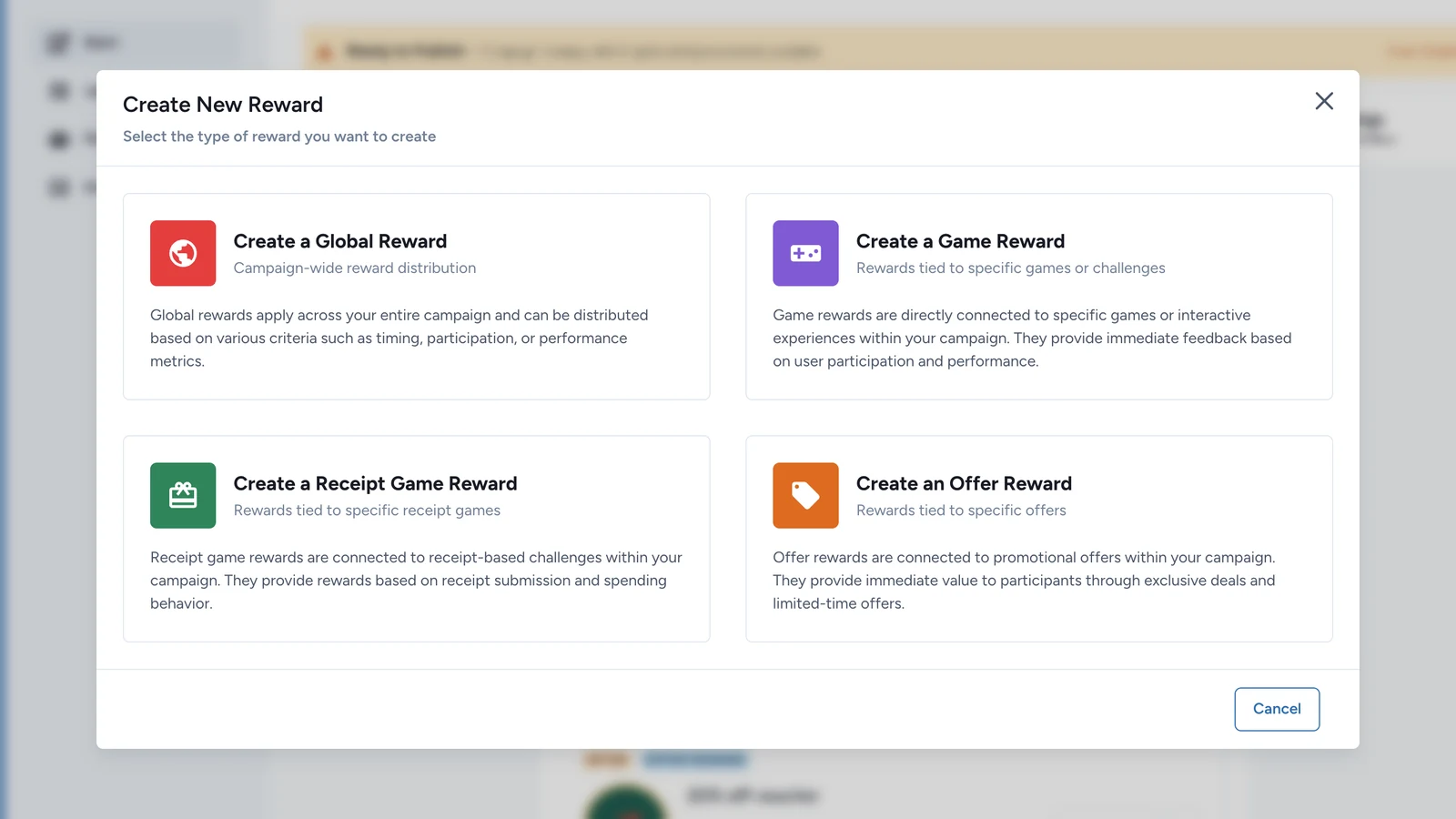
| Category | Handed out by | Linked from |
|---|---|---|
| Global Reward | Activity anywhere in the campaign, or at sign-up | Its own Reward Trigger |
| Game Reward | One game | The game's settings |
| Receipt Game Reward | One receipt game | The game's winning options |
| Offer Reward | One offer | The offer's Offer Reward |
Only a global reward can reward an event, a treasure hunt or a hunt object: those touchpoints have no reward setting of their own. See How rewards connect to touchpoints.
How winners are picked
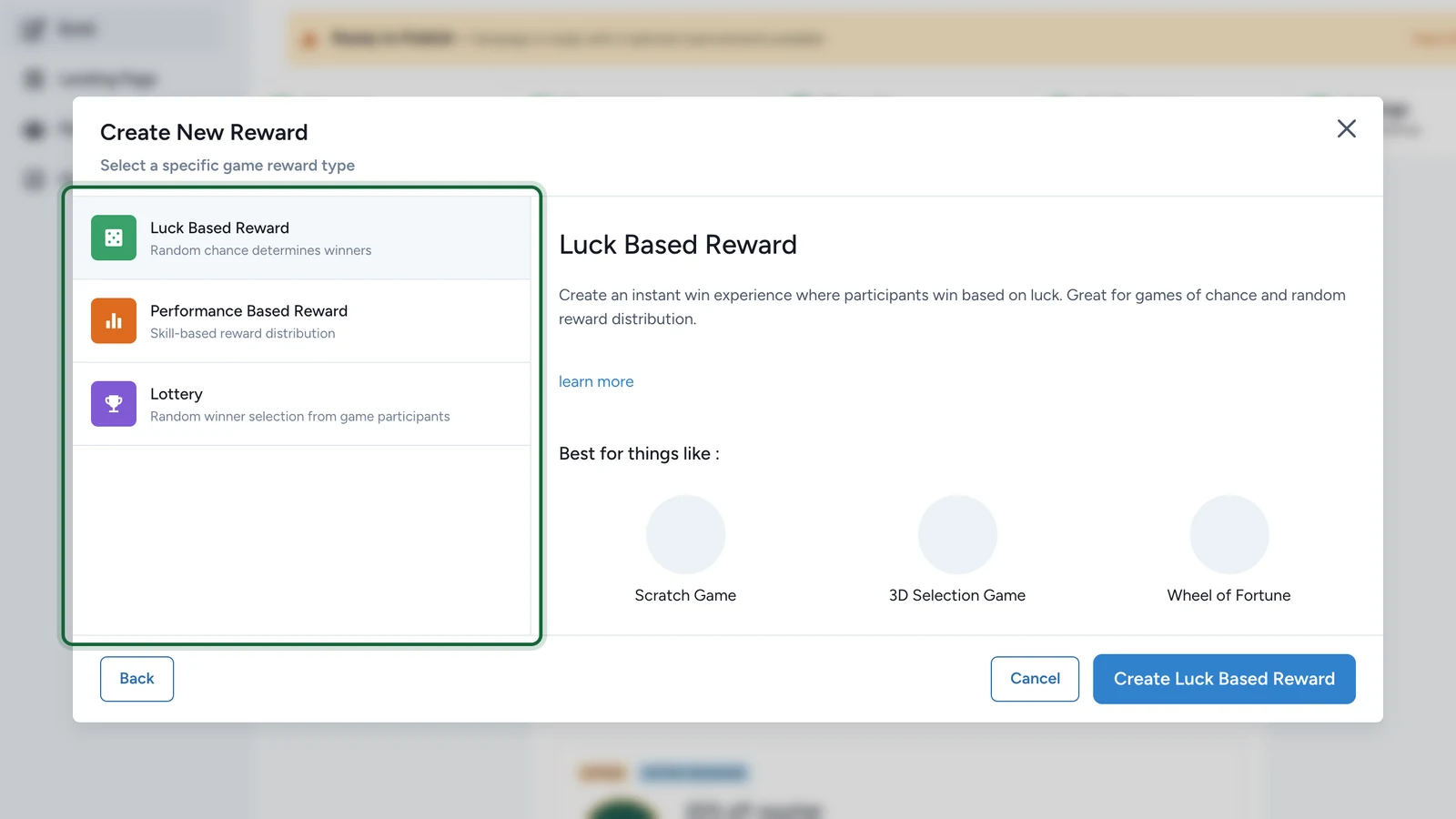
Each category offers its own types. For a game:
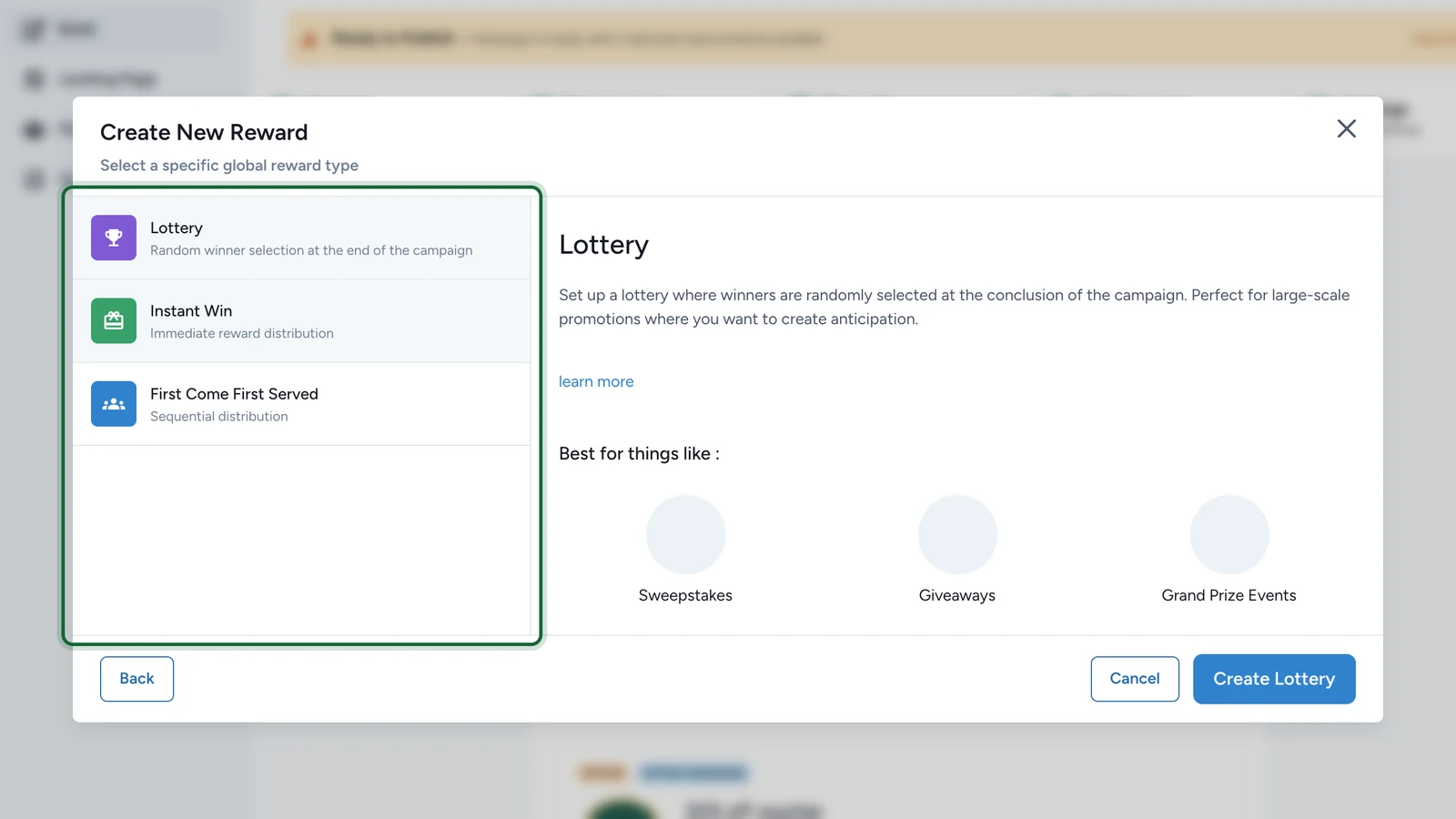
And for a global reward:
| Type | Winners learn it | Picked by | Guide |
|---|---|---|---|
| Luck Based Reward (game) | Straight away | Chance, in a wheel, scratch card or other luck game | Instant Win rewards |
| Instant Win (global) | Straight away | Chance, when they meet the trigger | Instant Win rewards |
| Lottery (game or global) | After the draw | A draw among everyone entered | Lottery rewards |
| Performance Based Reward (game) | When you declare them | Their rank in a skill game | Leaderboard rewards |
| First Come First Served (global) and Offer Reward | Straight away | The first claims, until none are left | First Come First Served rewards |
| Receipt Game Reward | Straight away | The receipt game's rules | Receipt game rewards |
Change a global reward's type
A global reward can switch between Lottery, Instant Win and First Come First Served: on its card, open the three-dot menu and select Change reward type.
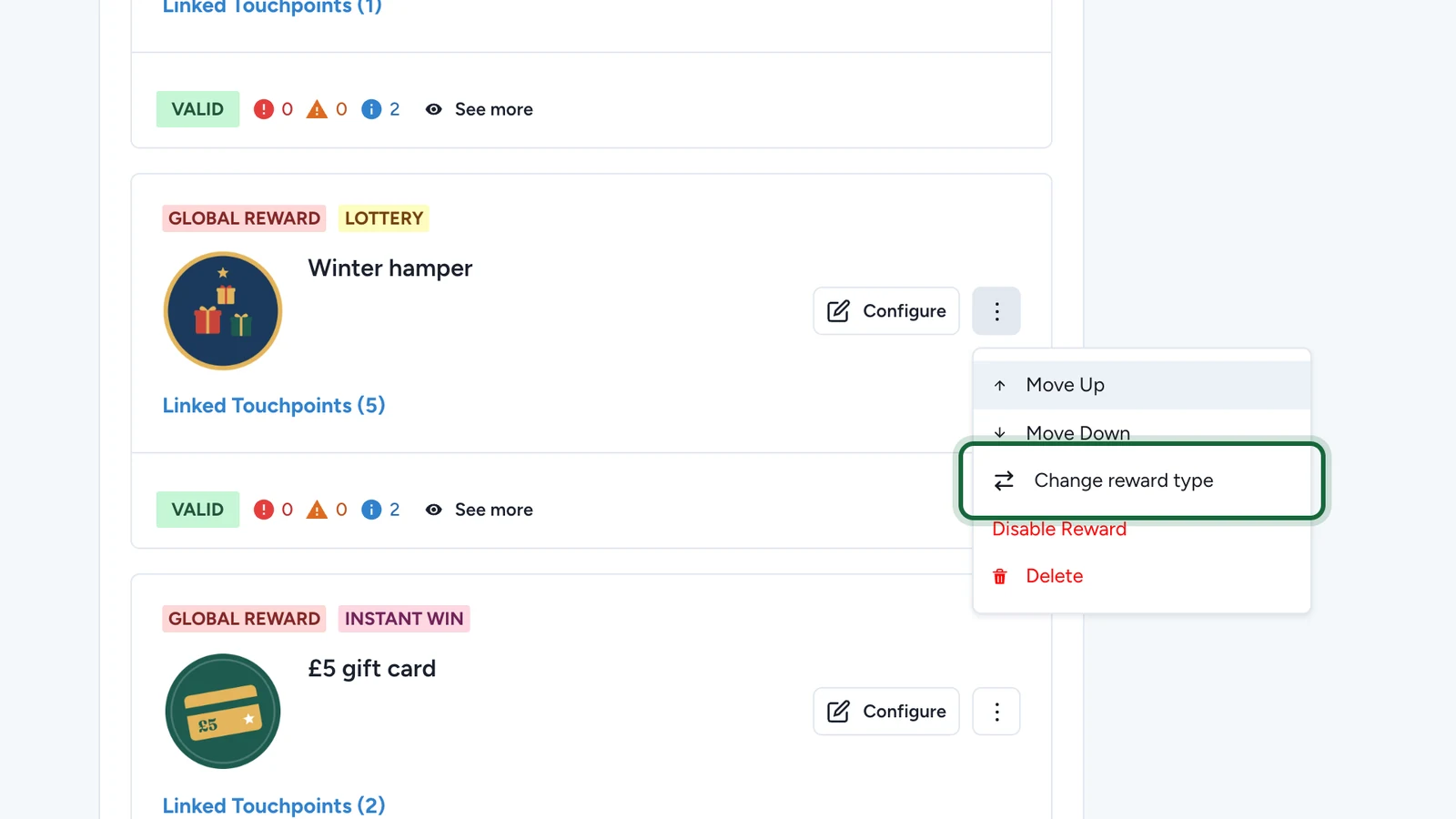
Game and offer rewards can't change type. Neither can a global reward once participants are eligible for it or have played for it.